DAC Worldwide’s Hydraulic Component Cutaway Set (710) is a tabletop assortment of industrial hydraulic components that have been modified for classroom use as training aids.
This video demonstrates setting up the cutting feature on Lincoln Electric's VRTEX® 360 Compact Tabletop virtual reality welding trainer.
This video provides overview of setting up and using the GMAW function on Lincoln Electric's VRTEX® 360 Compact tabletop virtual reality welding trainer.
This video provides an overview of setting up and using the SMAW function on Lincoln Electric's VRTEX® 360 Compact tabletop virtual reality welding trainer.
Watch an overview demonstration of using the Lincoln Electric's VRTEX® 360 Compact Tabletop virtual reality welding trainer.
Watch an unboxing Lincoln Electric's VRTEX® 360 Compact tabletop virtual reality welding trainer.
Watch an overview of setting up and using the GTAW function on Lincoln Electric's VRTEX® 360 Compact tabletop virtual reality welding trainer.
Experience real-world factory automation—right in the classroom. The PETRA II Advanced Industrial Control Trainer from LJ Create provides a complete model of an automated production line controlled by programmable logic controllers (PLCs), an HMI panel, and SCADA software. Students gain hands-on experience designing, programming, and troubleshooting complex industrial control systems in a safe, interactive learning environment.
This video introduces the PETRA II Advanced Industrial Control Trainer—a networked factory automation system designed for education and workforce training. Viewers will see how component parts are transported across a simulated plant, monitored by sensors, and controlled by PLCs and HMI software.
Highlights
- Overview of PETRA’s classroom-ready factory automation setup
- Parts transport through a modeled industrial plant using conveyors and pneumatic actuators
- Integration of PLCs, HMI panels, and programming software for real-time control
- Students developing and running ladder logic programs to automate part movement
- Continuous monitoring with a range of detection sensors
- HMI interface for supervision and live plant data visualization
- Built-in switchable faults for realistic troubleshooting and maintenance training
- SCADA control demonstrating monitoring, trend analysis, and predictive maintenance
Learning Applications
- PLC Programming and Ladder Logic
- Sensor Integration and System Monitoring
- Human-Machine Interface (HMI) and SCADA Control
- Fault Diagnosis and Predictive Maintenance
- Automation Systems Design and Troubleshooting
Take a look around LJ Create's virtual learning library! The library is filled with over 10,000 STEM lessons for students from elementary school age all the way up to vocational level.
PLCs are used widely across a range of industrial and manufacturing applications to control processes and systems. They play an important part in ensuring manufactured goods and automated services are provided as efficiently as possible. The skills required to implement and maintain these devices are key to many engineering programs of study.
LJ Create's Exploring STEM provides practical activities and real-world problem-solving tasks in the classroom. Investigate, design, build, and program robotic and automated machinery across a wide range of areas of technology.
Design projects include
- Engineering Design
- Biomedical Technology
- Energy in Buildings
- Agricultural Technology
- Construction Engineering
- Mobile Robotics
- Mechatronics
- Transportation Technology
- Manufacturing Technology
- Industrial Robotics
- Mass Transportation
- Electronics Technology
Pages
-
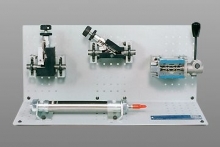 Item Number:710
 -
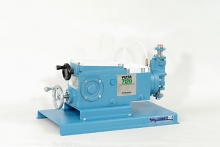 Item Number:278-170DAC Worldwide’s Hydraulic Diaphragm Metering Pump Cutaway, Lost Motion Adjustment Type (278-170) depicts a sectioned positive-displacement pump, which allows for realistic classroom or lab training in the operation, construction, and maintenance of common metering or in controlled volume pumps used in various sectors across the world.
 -
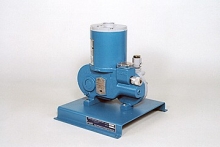 Item Number:275-130DAC Worldwide’s Hydraulic Diaphragm Pump Dissectible (275-130) features a fully restored industrial positive displacement diaphragm pump to create a teaching aid for process pump maintenance training.
 -
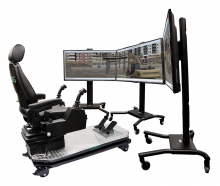 Item Number:HEXSimlog's Hydraulic Excavator Personal Simulator puts trainees at the controls of a modern Hydraulic Excavator in interaction with an articulated dump truck. Using life-like dynamic terrain combined with our intelligent instructional design, your trainees are guided through a series of 12 skill-building Simulation Modules.
 -
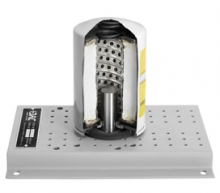 Item Number:773-055DAC Worldwide’s Hydraulic Filter Cutaway (773-055) is a professionally-crafted sectioned example of a commonly-encountered sump-type hydraulic filter used in hydraulic systems to maintain oil quality and machine health. The training aid enhances classroom training in hydraulic system design, maintenance, troubleshooting, and preventive/predictive maintenance.
 -
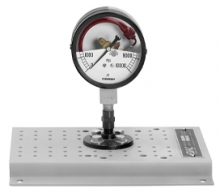 Item Number:773-050DAC Worldwide's Hydraulic Pressure Gauge Cutaway (773-050) is a Bourdon tube-type pressure widely used in industrial liquid and gas processes to monitor and document system pressures. The full-size, fully-detailed example gives learners a first-hand view into a component that is found in various applications worldwide.
 -
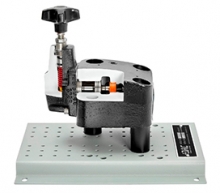 Item Number:773-217DAC Worldwide's Hydraulic Pressure Relief Valve Cutaway, Balanced Piston-Type (773-217) is a sectioned hydraulic, automatically triggered relief valve example with a two-stage balanced piston design, which incorporates a commonly-encountered valve type manufactured by an industry leader. T
 -
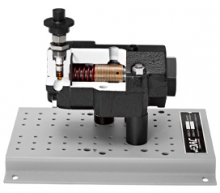 Item Number:773-213DAC Worldwide's Hydraulic Sequence Valve Cutaway (773-213) is a sectioned hydraulic sequence valve example with a two-stage balanced piston design, which incorporates a commonly-encountered valve type manufactured by an industry leader.
 -
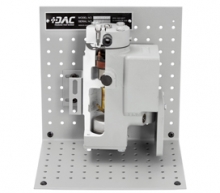 Item Number:273-840DAC Worldwide’s I/P Transducer Cutaway (273-840) is a detailed I/P converter cutaway that depicts a common current-to-pressure transducer used within industrial process control systems. This common piece of pneumatic control hardware is found in manufacturing facilities, petrochemical plants, refineries, and other similar industrial, commercial, and oil and gas applications.
 -
 Amatrol's IGNITE: Mastering Manufacturing program teaches Industrial Internet of things (IIoT) & Industry 4.0 skills required for today's manufacturing careers.