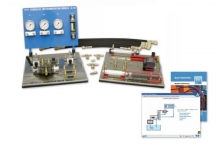
Each Basic Hydraulics training system features standard industrial grade components. This attention to quality gives students experience they would normally only get on-the-job by helping them recognize industrial components and how to troubleshoot them more effectively. Components included with Basic Hydraulics are pre-mounted on circuit panels with silk-screened labels next to each, which facilitates ease of use and identification.
Prepare learners for the future of Industry 4.0 with the Amatrol 990-SM10 Smart Manufacturing Learning System, developed in collaboration with CESMI – the Smart Manufacturing Institute. This hands-on, portable trainer is designed to guide students from foundational concepts to advanced applications in smart manufacturing. With cutting-edge hardware, industrial-grade software, and real-world IT/OT integration capabilities, the 990-SM10 delivers practical experience in monitoring equipment, optimizing energy use, and building connected factory solutions.
Students will engage directly with essential technologies like sensors, PLCs, OPC UA, MQTT, and cloud infrastructure, using both wired and wireless configurations. Its compact, rugged design includes roller wheels and a built-in storage pouch, making it ideal for classroom or lab use. Whether you're launching a smart manufacturing curriculum or upgrading an existing program, the Amatrol 990-SM10 is the flexible, future-ready solution your learners need.
At Area 31 Career Center, part of Ben Davis High School in Indianapolis, the Digital Integrated Manufacturing (DIM) program is giving students more than just classroom instruction—it's delivering real-world skills and job opportunities. Led by instructor Mike Morrow, this two-year program combines Amatrol’s hands-on training systems with project-based learning, industry credentials, and work-based internships that prepare students for careers in smart manufacturing, robotics, and IIoT.
With access to Amatrol’s Skill Boss, robotics trainers, and systems for pneumatics, hydraulics, and mechanical drives, students master the fundamentals employers need most. Through their second-year internships, students are gaining on-the-job experience—and job offers. In fact, for two years running, every senior who completed the work-based learning program has been hired before graduation. Area 31 is not just teaching skills—it's launching careers in advanced manufacturing.
At Kiel High School in Wisconsin, students are learning what it takes to thrive in modern manufacturing—before they even graduate. Through an innovative course combining engineering, mechatronics, and industry controls, instructor Ted Bonde and his students use Amatrol’s Industry 4.0 training systems to master real-world technologies like PLCs, pneumatics, hydraulics, and automation cells. With hands-on learning using tools like the Skill Boss, students gain both technical knowledge and confidence as they prepare for careers in manufacturing, engineering, and automation.
Kiel High School’s program stands out thanks to a forward-thinking four-school, four-industry consortium. This partnership provides access to advanced training equipment and real-world employer insights, ensuring students learn exactly what’s needed in today’s workforce. With local manufacturers eager to hire graduates straight from the program, this is a high school experience that leads directly to high-wage, high-skill careers—no four-year degree required.
In today’s rapidly growing renewable energy sector, skilled technicians are vital to maintaining the operational efficiency of wind turbines. Amatrol’s Turbine Electric Hub Troubleshooting Learning System (950-TEH1) delivers the hands-on, real-world training needed to prepare learners for the challenges of turbine operation and maintenance. With a focus on electric hub systems, this advanced training platform includes interactive fault troubleshooting, pitch control units, servo drives, blade positioning, and braking systems—everything a technician needs to diagnose and resolve critical issues.
Designed to simulate utility-scale turbines, the 950-TEH1 features over 30 computer-controlled faults and integrates seamlessly with Amatrol’s Turbine Nacelle Troubleshooting and Turbine Generator Control systems for a comprehensive wind energy learning experience. With 3-axis blade operation and a highly realistic interface, learners develop the adaptive skills needed to support the future of clean energy production. Whether you're starting a new wind energy program or upgrading an existing one, Amatrol’s 950-TEH1 system is your key to empowering the next generation of renewable energy technicians.
Amatrol’s Turbine Nacelle Troubleshooting Learning System (950-TNC1) offers comprehensive, hands-on training to prepare students and technicians for the challenges of maintaining utility-scale wind turbine systems. This advanced trainer replicates real-world turbine nacelle operations and includes a turbine control unit, hydraulic power system, yaw drive with dual motors, twist box, wind simulator, ultrasonic anemometer, and more—creating a fully functional training experience that mirrors field conditions.
Using Amatrol’s interactive multimedia curriculum and FaultPro, a computer-based fault insertion system, learners practice troubleshooting across all major subsystems—electrical, mechanical, and hydraulic. With exercises that simulate variable wind conditions and changing loads, students gain the skills needed to safely operate, adjust, and repair modern wind turbines. The 950-TNC1 is an essential training solution for any renewable energy or wind technology program looking to develop job-ready technicians.
Amatrol’s Wind Turbine Generator Control Troubleshooting Learning System (950-TGC1) delivers hands-on training for future wind energy technicians by simulating the real-world control systems found in utility-scale wind turbines. Featuring industrial components such as a generator control unit, power distribution panel, transformer, inductive filters, and a 3-phase inverter, this system equips learners with the skills to safely operate, adjust, and troubleshoot turbine generator systems.
With Amatrol’s integrated FaultPro software, instructors can insert up to 29 realistic faults across six key areas, allowing students to
Hands-On Training in Small Wind Technology
Amatrol’s Small Scale Wind Turbine Technology systems deliver hands-on, comprehensive training in core wind energy principles. Built for students and professionals entering the renewable energy workforce, these systems cover a full spectrum of competencies: wind turbine operation, system performance, electrical integration, and battery storage. Learners explore both AC and DC wind systems, turbine siting, balance of system components, and the importance of energy conservation.
Pairable with complementary modules like Wind Concepts (950-WC1), Alternative Energy (850-AEW), and Grid-Tie Systems (85-GT), this training solution prepares students with the foundational and practical skills required in today’s green energy sector. Developed with safety, system efficiency, and real-world applications in mind, Amatrol’s small wind solutions are ideal for high schools, technical programs, and workforce development.
Utility Wind Turbine Systems with Real-World Troubleshooting
Amatrol’s Utility Scale Wind Turbine Technology learning systems offer immersive training on full-scale wind turbine subsystems, including the nacelle (950-TNC1), generator control (950-TGC1), and electric hub (950-TEH1). These units can function independently or be networked together via fiber optic connections, allowing students to simulate bringing a turbine online in a controlled environment.
Students engage with high-level technical concepts such as pitch control, yaw systems, safety loops, servo operations, battery management, and power distribution. This training prepares them for real-world turbine troubleshooting and system integration. Ideal for colleges, universities, and workforce training programs, Amatrol’s utility-scale wind systems replicate modern turbine environments with unmatched depth and detail.
Welcome to the future of industrial training—where innovation meets immersion. Amatrol’s VR Smart Factory transforms traditional learning with an interactive, headset-based simulation that places students directly inside an advanced automated facility. Using the Meta Quest VR headset, learners can explore key Industry 4.0 processes, including pneumatic pick-and-place systems, automated gauging for quality assurance, and inventory control powered by industrial robotics.
But this isn’t just a passive viewing experience. The VR Smart Factory enables learners to participate in experimentation, troubleshooting, and mastering real-world skills in a safe and risk-free environment. When paired with Amatrol’s physical trainers, this blended learning approach offers the best of both worlds, enabling educators to simulate high-stakes scenarios and reinforce critical concepts with confidence. It’s time to bridge the gap between theory and practice. It’s time to prepare your students for the smart factories of tomorrow.
Pages
-
 Item Number:BH-85
 -
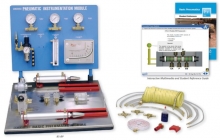 Item Number:85-BPAmatrol’s Basic Pneumatics training system (85-BP) introduces pneumatic principles through a combination of Amatrol’s top-flight multimedia curriculum with hands-on industrial pneumatic skill-building. Topics covered in this learning system include single-acting cylinder circuits, pressure vs. cylinder force, and flow control valves, while the panels can be used to practice skills such as connecting and operating a needle valve to control actuator speed.
 -
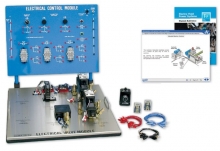 Item Number:85-EHThe Electro-Hydraulics training system includes an electrical control panel with relay control components and an electrical valve module with solenoid-operated hydraulic directional control valves and electrical/electronic sensors. These components will be used to study a variety of topics including electrical control systems, basic control devices, power devices, control relays, sequencing control, timer control, pressure control applications, and circuit applications.
 -
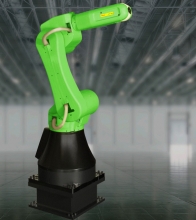 Item Number:CR-35iAFANUC’s new CR-35iA is the world’s first collaborative robot with a payload capacity of up to 35 kg. Fenceless, it opens a whole new world of possibilities. Working safely side by side with human operators, it is space as well as cost saving. And because inside it’s like any other FANUC robot, it operates like all FANUC robots. Certified to meet the requirements of ISO 10218-1:2011 and RIA/ANSI R15.06-2012, FANUC’s CR-35iA collaborative robot can work in a variety of applications alongside human workers including: machine tending, handling heavy payloads that require lift assist devices or custom equipment, higher payload mechanical assembly, palletizing or packing, and tote or carton handling.
 -
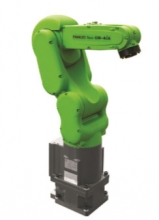 Item Number:CR-4iACR-4iA is a small collaborative robot with 4 kg payload
 -
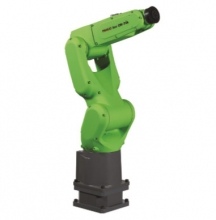 Item Number:CR-7iAThe FANUC CR-7iA is FANUC's newest collaborative robot resembles the LR Mate family. Painted green to show it's ability to work beside humans, you can expect the same reliability as FANUC's yellow robots. The CR-7iA is ideal for small part sorting and assembly, inspection, machine tending, and part delivery. It has a 7 kg payload, 717 mm reach, and is equipped with iRVision and Force Sensing. There are a variety of mounting options such as floor, wall, and ceiling.
 -
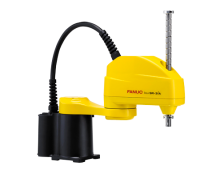 FANUC’s new SCARA robots are ideal for high-speed, precision applications such as assembly, pick and place, testing/inspection and packaging processes.
 -
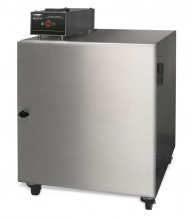
In the rare event that a burning ember or spark is drawn into the fume extraction unit, there is the possibility that debris in the filters could ignite. Although any resultant fire would typically be retained within the fume extraction unit, this would cause significant damage and in extreme circumstances, the risk may extend beyond the extraction unit. For processes where such risks have been identified, additional protection in the form of an in-line firebox is an additional precaution.
-
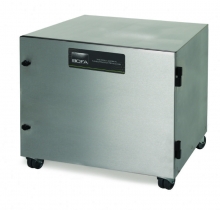
The BOFA inline pre-filter 1000 has been designed specifically for applications that generate high amounts of dust or particulate.
This inline filter unit is positioned alongside the main BOFA fume filtration system to increase the overall filter capacity and extend the life of the main filters. The DeepPleat DUO pre-filter incorporates a massive drop-out chamber within the filter, having a volume area of 15ltrs. Above the drop-out chamber but still within the housing there is a sealed 200mm deep pleat layer of F8 media giving a surface area in excess of 30 sq meters.
-
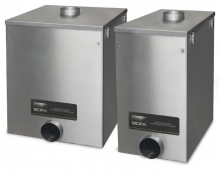 The BOFA inline prefilters have been designed specifically for applications that generate high amounts of dust or particulate.