The Acron Aviation TransitSim™ Bus Simulator delivers realistic training for transit operators, reinforcing core bus-driving skills in a risk-free environment with immersive visuals and Replay Studio™ review tools.
Gateway Technical College (GTC) is helping shape the workforce of tomorrow with its Smart Factory lab located at the SC Johnson Integrated Manufacturing and Engineering Technology (iMET) Center in Sturtevant, Wisconsin. As the first publicly funded technical college in the United States, GTC continues to lead by preparing students with the skills needed for Industry 4.0.
This advanced lab simulates a real-world production line where students gain hands-on experience in “lights out” manufacturing, automation, and data analytics. Learners work with programmable logic controllers (PLCs), human-machine interfaces (HMIs), industrial controllers, and smart sensors to understand how modern factories operate. By integrating connectivity and data analysis, the lab demonstrates how to unlock siloed information and apply it to real-world decision-making.
One of the lab’s most exciting features is its development of a digital twin—a virtual replica of the physical environment that collects and processes real-time data from robotics, machinery, and sensors. This allows students to explore artificial intelligence, advanced automation, and smart technologies that are rapidly transforming the manufacturing industry. By engaging with this innovative environment, students are better prepared to become the highly skilled employees industry partners need today and in the future.
Industrial Absorption Principles for Education & Research
Teaching Industrial Absorption Through Real Experiments
Absorption is a critical separation process in chemical engineering, widely applied in industries such as environmental engineering, pharmaceuticals, and petrochemicals. Pignat’s absorption training systems provide hands-on learning by simulating real-world gas–liquid interactions, enabling students to explore both the theory and practice of mass transfer operations.
These systems are designed for flexibility and precision, helping learners understand core concepts such as absorption efficiency, column design, and operating parameters. Whether used in an undergraduate classroom or an advanced research lab, Pignat’s absorption units bridge the gap between academic knowledge and industrial practice.
Key Learning Outcomes
- Understand the fundamentals of gas–liquid absorption processes
- Explore packed and tray column designs
- Measure and analyze absorption efficiency under varied conditions
- Apply theoretical principles to real-world separation challenges
Solid–Fluid Adsorption Principles for Engineering Labs
Hands-On Solid–Fluid Interaction Experiments
Adsorption plays a vital role in chemical engineering and industrial applications, from gas purification and pollution control to water treatment and chemical recovery. Pignat’s adsorption training units enable students to study surface phenomena, adsorption isotherms, and regeneration techniques.
These versatile systems demonstrate the behavior of gases and liquids when interacting with solid surfaces, offering real-world insight into adsorption processes that industries rely on daily.
Key Learning Outcomes
- Understand adsorption isotherms and kinetics
- Examine breakthrough curves and column design
- Study regeneration and reuse of adsorbents
- Apply adsorption theory to environmental and industrial challenges
Crystallization Principles for Future Engineers
Explore the Science of Crystallization with Pignat
Crystallization is a widely used process in chemical, pharmaceutical, and food industries for product purification and separation. Pignat’s crystallization units provide a hands-on approach to studying solubility, cooling rates, and crystal formation.
Students gain real-world understanding of crystal nucleation and growth, learning how operational conditions affect product quality and purity.
Key Learning Outcomes
- Examine solubility and saturation principles
- Study the impact of cooling and evaporation on crystallization
- Analyze crystal growth and size distribution
- Apply solid–liquid separation concepts to industrial processes
Train Students in Industrial-Scale Distillation Concepts
From Classroom to Industry: Distillation Education
Distillation is one of the most common and important separation methods in the chemical process industry. Pignat’s distillation training systems bring industrial operations into the classroom, teaching fractional distillation, column efficiency, and reflux control.
These systems allow students to analyze mixtures, understand boiling point differences, and optimize process conditions—all while reinforcing real-world chemical engineering skills.
Key Learning Outcomes
- Perform simple and fractional distillation experiments
- Examine column efficiency and operating parameters
- Understand reflux and product purity control
- Apply separation principles to multi-component systems
Explore Vapor–Liquid Equilibrium with Pignat Systems
Thermodynamics Meets Real-World Application
Understanding vapor–liquid equilibrium (VLE) is essential for designing separation processes. Pignat’s ebulliometer training systems allow students to investigate boiling points, azeotropes, and thermodynamic properties directly in the lab.
These systems bridge theory and practice, giving learners critical insight into the phase behavior that drives distillation and other chemical processes.
Key Learning Outcomes
- Measure and analyze boiling points under different pressures
- Explore azeotrope formation and its impact on separation
- Apply vapor–liquid equilibrium data to distillation design
- Strengthen thermodynamic understanding with hands-on training
Teach Industrial Evaporation in the Lab
Evaporation Experiments for Chemical Engineering Education
Evaporation is widely used in chemical, food, and environmental industries to concentrate solutions and recover solvents. Pignat’s evaporation training units provide hands-on learning of heat transfer, phase change, and energy efficiency.
These systems allow students to evaluate operating conditions and optimize processes, preparing them for practical applications in industrial environments.
Key Learning Outcomes
- Understand evaporation principles and heat transfer
- Study concentration and solvent recovery techniques
- Explore the role of energy efficiency in evaporation systems
- Connect theoretical concepts with real-world industrial practice
Liquid–Liquid Separation for Education & Research
From Theory to Application: Extraction Education
Liquid–liquid extraction is a versatile separation technique, commonly applied in pharmaceuticals, environmental engineering, and chemical production. Pignat extraction units give students a hands-on platform to explore solvent recovery, phase equilibria, and distribution coefficients.
By operating real equipment, learners connect theoretical concepts to industrial practices, gaining valuable process engineering skills.
Key Learning Outcomes
- Understand phase equilibria in liquid–liquid systems
- Perform separation and purification through extraction
- Study solvent recovery and distribution coefficients
- Apply liquid–liquid extraction to real industrial challenges
Explore Solid–Liquid Separation Hands-On
Pignat Filtration Systems for Education & Research
Filtration is a core separation method across industries, from chemical production to environmental management. Pignat’s filtration training units let students experiment with solid–liquid separation, pressure effects, and filtration media.
These systems prepare learners for real-world challenges by linking academic knowledge with industrial filtration applications.
Key Learning Outcomes
- Study the mechanics of solid–liquid separation
- Understand the impact of pressure and media type
- Evaluate efficiency and product quality
- Apply filtration principles to chemical and environmental processes
Pignat Reaction Training Units for Education
Hands-On Training in Chemical Kinetics
Reaction engineering is the foundation of chemical process design. Pignat’s reaction training systems enable students to explore kinetics, reactor operation, and process optimization in a controlled lab setting.
These systems reinforce critical concepts in chemical engineering, preparing learners to design and scale up industrial processes effectively.
Key Learning Outcomes
- Understand chemical kinetics and reaction rates
- Explore different reactor designs and configurations
- Study process optimization and operating parameters
- Apply reaction engineering concepts to industrial challenges
Pages
-

-
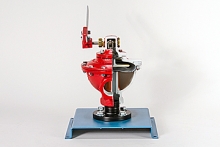 Item Number:295-723DAC Worldwide's Treater Dump Valve Cutaway (295-723) is a sectioned industrial specialty oilfield valve for training in the operation, construction, and maintenance of on-off type dump valves.
 -
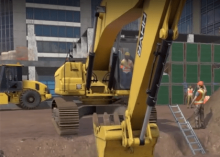 The primary goal of this course is to teach workers safe procedures for working in and around a trench environment on a construction site. Hard Hat VR's Trenching and Excavation Simulation is ideal for future employees or supervisors who will work in or around trenches on construction sites.
 -
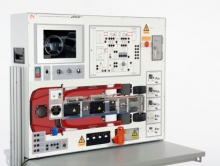 Item Number:CO3221-7DTo prepare students for electrification of the powertrain in commercial vehicles, the renowned HV training system for passenger cars from Lucas-Nülle has been modified and adapted. The special learning concept of the training system, which combines theoretical and practical content in a target group-oriented manner, enables flexible on-site implementation that is taking regional, operational, and industry-specific features into account.
 -
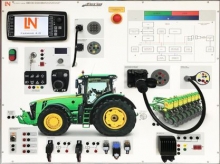 Item Number:CO3221-7FThis training system from the TruckTrain series focuses on the topic of "Smart Farming 4.0" based on the ISO bus. Special attention is paid to the function of "Precision Farming with Section Control", which is implemented in the hardware in a practical and interactive way.
 -
 Item Number:950-TEH1Train wind turbine technicians with Amatrol’s Turbine Electric Hub Troubleshooting Learning System (950-TEH1), featuring real-world component-level diagnostics, pitch control, and electronic fault insertion.
 -
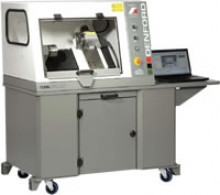 A compact 2-axis CNC Lathe with totally enclosed high-visibility interlocking guard, suitable for all levels of education and training. Programmable spindle speeds and feedrates make the Turn 270 PRO ideal for cutting a range of resistant materials such as wax, plastic, acrylic, free cutting alloys, aluminum and steel.
 -
 Learn about the Turn 370 Pro CNC Lathe, a high-capacity 2-axis machine perfect for educational and training programs requiring precision and durability.
 -
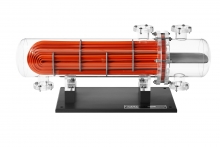 Item Number:285DAC Worldwide’s U-Tube Heat Exchanger Training Model (285) depicts a highly-detailed scale model of a common u-tube heat exchanger in a technically-accurate, professionally-crafted design. Based on a common make and model of a heat exchanger that reflects design standards established by the Tubular Exchanger Manufacturers Association (TEMA) and the ASME.
 -
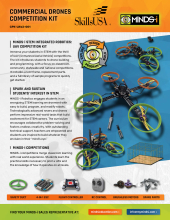 Item Number:CPK-UAM2-001Explore the MINDS-i Commercial Drones Competition Kit for hands-on UAV building, programming, tuning, and competition-based STEM learning. Designed for 2–3 students.