This video demonstrates the Matrix Torsion of Rods experiment in manual mode, where students investigate how different materials respond to applied torque. Following the included curriculum workbook, learners compare the torsional characteristics of brass, aluminum, and steel rods while collecting experimental data for analysis.

During the investigation, students install each rod, measure its dimensions, and gradually increase the angle of twist while recording the torque required at each increment. The experiment is repeated for each material, allowing students to compare torque-versus-angle relationships and better understand material properties, torsional stiffness, and structural behavior through practical experimentation.

What You'll Learn

  • How to set up the Torsion of Rods experiment in manual mode
  • Comparing the torsional behavior of brass, aluminum, and steel rods
  • Measuring torque and angle of twist using integrated LCD displays
  • Recording experimental measurements for multiple materials
  • Investigating the relationship between torque and angular displacement
  • Repeating experiments to compare material properties
  • Plotting torque versus angle graphs for analysis
  • Reinforcing engineering concepts through hands-on laboratory investigations

Why Study Torsion?

Torsional loading is an important consideration in the design of shafts, drive systems, fasteners, and structural components. This experiment gives students practical experience measuring the effects of torque on different materials, helping them connect engineering theory with real-world mechanical behavior and material performance.

This video demonstrates the Matrix Bending Stress experiment using data acquisition mode, allowing students to investigate how bending loads create stress within a beam. Using the included curriculum workbook, learners configure strain gauges, collect real-time measurement data, and perform engineering analysis to validate theoretical calculations.

Students begin by configuring a quarter-bridge Wheatstone bridge circuit using strain gauges and precision resistors before applying incremental loads to the beam. As each load is added, measurements are captured through the integrated data acquisition system and exported for analysis. The resulting data allows students to calculate bending stress, compare theoretical and experimental results, and gain practical experience with strain measurement techniques used throughout structural and mechanical engineering.

What You'll Learn

  • How to configure a quarter-bridge Wheatstone bridge using strain gauges
  • Setting up the Bending Stress experiment using data acquisition
  • Applying incremental loads to investigate bending stress
  • Collecting real-time strain measurements using integrated sensors
  • Measuring beam dimensions for engineering calculations
  • Exporting experimental data for post-laboratory analysis
  • Comparing theoretical bending stress calculations with measured results
  • Developing practical skills in experimental stress analysis

Why Study Bending Stress?

Measuring bending stress is fundamental to understanding how structural components perform under load. This experiment introduces students to strain gauge technology, Wheatstone bridge circuits, and modern data acquisition methods while reinforcing core concepts in mechanics of materials, structural analysis, and engineering design.

This video provides an overview of the Matrix Fundamental Mechanics Materials Kit, demonstrating how students perform practical experiments to investigate the mechanical properties of engineering materials. Designed for classroom and laboratory environments, the kit allows learners to build experiments using the portable work panel while following the included curriculum workbook.

The featured experiment investigates how an aluminum beam deflects under increasing loads. Students measure the beam's dimensions, apply incremental weights, and use a precision dial gauge to record deflection. The collected data is then plotted on a graph, helping students understand the relationship between load and beam deflection while reinforcing important concepts in material science and mechanics.

What You'll Learn

  • How to perform beam deflection experiments using the Materials Kit
  • Measuring beam dimensions for engineering calculations
  • Recording beam deflection with a precision dial gauge
  • Applying incremental loads and collecting experimental data
  • Plotting deflection versus load graphs for analysis
  • Understanding stress, strain, and elastic behavior
  • Exploring Young's modulus and other material properties
  • Developing practical laboratory and engineering analysis skills

Topics Covered by the Materials Kit

The Fundamental Mechanics Materials Kit supports a wide range of experiments covering beam deflection, stress and strain, torsion, elastic constants, Young's modulus, and other core principles of mechanics of materials. The included curriculum provides approximately 10 hours of guided laboratory activities that combine theory with practical investigation, making it ideal for engineering, technology, and STEM education programs.

The Matrix Fundamental Mechanics Dynamics Kit introduces students to the core principles of dynamics through a series of engaging, hands-on laboratory experiments. Designed for engineering, physics, and STEM education, the kit uses a portable work panel and a guided curriculum to help learners investigate the behavior of moving systems and connect theoretical concepts to practical applications.

In this video, students complete a flywheel experiment from the included curriculum to measure the effects of applied loads on rotational motion. By recording experimental data, calculating torque and angular acceleration, and analyzing graphical results, learners gain valuable insight into rotational dynamics while developing essential laboratory and engineering analysis skills.

Key Engineering Concepts

  • How to perform flywheel experiments using the Dynamics Kit
  • Investigating the relationship between torque and angular acceleration
  • Measuring rotational motion using experimental techniques
  • Recording, averaging, and analyzing laboratory data
  • Plotting and interpreting engineering graphs
  • Exploring pulleys, mechanisms, and energy conservation
  • Investigating static and sliding friction
  • Developing practical laboratory and engineering problem-solving skills

Topics Covered by the Dynamics Kit

The Fundamental Mechanics Dynamics Kit supports approximately 10 hours of guided laboratory activities covering flywheels, pulleys, static and sliding friction, mechanical mechanisms, and energy conservation. Each experiment encourages students to collect real experimental data, compare observations with engineering theory, and build a strong foundation in dynamics and mechanical engineering principles.

Pages

  • BOFA Americas Laser Fume Extraction

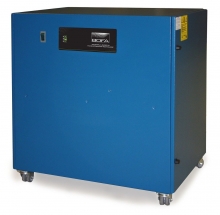
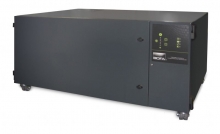
    The Advantage Base 1 Oracle has been designed so that a number of manufacturer’s laser engravers can sit on top of the extractor, effectively doubling it up as a workstation.

    All the Base units in the range have the option of an onboard compressor for a compact installation. BOFA’s ‘Easi-Seal’ filter location makes filter change easy, quick and safe.

    The revolutionary Auto-Voltage Sensing Turbine automatically self-adjusts to run on any voltage worldwide, whilst the Reverse Flow filter technology enhances filter performance and ensures longer filter life.
  • BOFA Advantage Range of Laser Fume Extractors

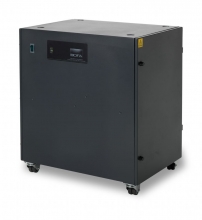
    The Laser Companion 'Ride On' range has been designed so that a number of manufacturer's laser engravers can sit on top of the extractor, effectively doubling it up as a workstation.

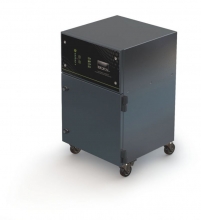
    The Advantage Base 2 Oracle has been designed so that a number of laser engravers can sit on top of the extractor, effectively doubling it up as a workstation.

    All the Base units in the range have the option of an onboard compressor for a compact installation. BOFA’s Easi-Glide filter location mechanism makes filter changes easy, quick and safe.

  • BOFA Americas Laser Fume Extraction

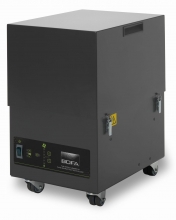
    The Advantage Base 3 has been designed specifically for the Universal VersaLaser engraver. The dimensions of the unit allow the VersaLaser to fit perfectly onto the extractor, effectively doubling it up as a workstation. The unit is also offered with an onboard air compressor to provide the laser with its air assist requirements and comes complete with extraction hose kit and compressor link up on compressor models.

  • BOFA Americas Laser Fume Extraction

    The Advantage Base Z has been designed specifically for the new Epilog Zing laser engraver. The dimensions of the unit allow the Zing to fit perfectly onto the extractor.

  • BOFA Americas Laser Fume Extraction

    The AD GoldSEAL RS is a dust extraction system designed for the jewelry industry that recovers and collects precious metals.

    The metal particles are collected in an easy to remove tray and the HEPA filter can be incinerated to reveal the precious metal collected in the filtration process.

    Automatic Flow Control allows the user to preset correct air flow rates, for lower noise levels and allow further protection of the HEPA filter.

  • BOFA Americas Laser Fume Extraction
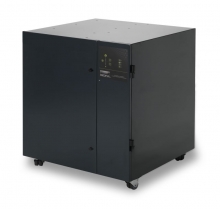
    The AD Universal fume extraction and filtration system has been designed to provide cost-effective solutions for light to medium duty applications. These compact systems are ideal for small-scale industrial environments and light laser coding applications.
  • CTE Training Equipment

    High school students are destined to become knowledge workers, regardless of whatever specific career choice they make. Engineering and technology offer some of the most rewarding career opportunities possible! Amatrol’s high school programs are designed to engage students who demand a high degree of interactivity and challenge to keep them interested and learning. All of our high school programs articulate to colleges for up to 18 credit hours.

  • Amatrol Level 1 Programmable Controllers
    Item Number:
    890-PEC-B
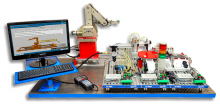
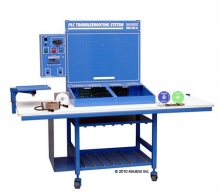
    The model 890-PEC-B Programmable Controller Troubleshooting Learning System teaches programming and troubleshooting of programmable controllers and their use in industrial, commercial, and residential applications. The 890-PEC-B System teaches PLC troubleshooting like no other product by providing a hands-on learning station that models real world PLC-controlled machines with up to 40 faults that can be inserted into the system.
  • Amatrol Fluid Power Trainers
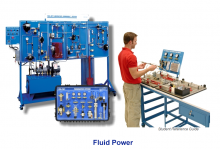
    Amatrol’s fluid power training systems are the best in the industry. Our learning programs are developed in partnership with industry and education to ensure that the skills are on target to support modern industry needs.
  • Learning is interactive and challenging
    Amatrol’s High School Learning Systems create the need for students to want to learn math and science – they can’t interact with the exciting technology without it. Learning is interactive and challenging, keeping them engaged and wanting to do more. The math and science so desperately needed for 80% of jobs today is a natural outcome.

Pages