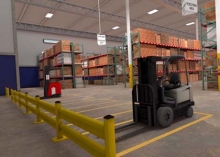
The primary goal of this course is to teach you safe work procedures to follow in a warehouse environment. You will learn how to maintain a safe warehouse and identify common hazards. The Warehouse Hazard awareness simulation is ideal for employees or supervisors who will work in or visit warehouses.
Prepare Students for Modern Fabrication with Robotic Welding and Cutting
MOD-WELD® and MOD-CUT® systems from APT Manufacturing Solutions help schools, colleges, and workforce training centers introduce students to the next level of welding, cutting, robotics, and advanced manufacturing. Built around FANUC cobots and industrial robots, these systems help programs connect foundational fabrication skills with the automated technologies used in today’s industry.
These robotic fabrication systems can support everything from introductory CTE welding programs to advanced college-level robotics, mechatronics, and smart manufacturing labs.
Step 1: Build Welding and Cutting Fundamentals
Students begin by learning safety, materials, joint preparation, measurement, fit-up, workholding, weld quality, and cutting fundamentals.
Step 2: Introduce Robotic Processes
MOD-WELD® and MOD-CUT® help students see how manual skills transfer into automated workflows, including robot motion, torch positioning, part setup, and repeatability.
Step 3: Apply Programming and Automation Concepts
Students gain exposure to cobot programming, FANUC interfaces, offline programming, vision, seam tracking, and production-style workflows.
Step 4: Prepare for Industry Roles
Programs can connect robotic fabrication training to careers in welding, fabrication, robotics operation, automation, advanced manufacturing, and industrial maintenance.
Robotic welding and cutting do not replace foundational hands-on training. They complement it by helping students understand how welding and fabrication skills are applied in modern automated environments.
- Increase student engagement with robotics, automation, and real-world technology.
- Reinforce welding fundamentals through repeatable robotic processes.
- Teach automation readiness, including setup, programming, troubleshooting, and process control.
- Support career pathways in welding, robotics, fabrication, and advanced manufacturing.
- Help programs modernize labs while keeping manual welding instruction at the center of skill development.
For high school welding, manufacturing, STEM, and robotics programs, MOD-WELD® and MOD-CUT® systems can introduce students to automation in a way that is approachable, visual, and hands-on.
- Introduce students to robotic welding and plasma cutting careers.
- Support welding, manufacturing, engineering, robotics, and STEM pathways.
- Help students connect classroom learning to local industry needs.
- Use cobot systems to demonstrate automation concepts in a compact lab footprint.
- Build awareness of future careers before students enter college, apprenticeships, or the workforce.
Best fit: Cobot weld carts, cobot cut carts, mobile travelers, fixture tables, clamp kits, and introductory automation demonstrations.
For community colleges, technical colleges, and workforce training centers, MOD-WELD® and MOD-CUT® systems can support deeper instruction in robotic programming, production workflows, weld quality, process optimization, and industrial automation.
- Prepare students for robotic welding operator, technician, and automation support roles.
- Support advanced welding, robotics, mechatronics, and manufacturing programs.
- Demonstrate high-volume production concepts and fixture-based repeatability.
- Expose students to FANUC robots, FANUC CRX cobots, Rockwell controls, and industrial power supplies.
- Help programs align training with regional employer expectations.
Best fit: Cobot drop centers, robotic weld cells, dual-station systems, rotary tables, H-frame cells, headstock/tailstock systems, offline programming, vision, and seam tracking.
Robotic fabrication systems can support broader credentialing goals by giving students hands-on exposure to the skills used in advanced manufacturing environments. While certification requirements vary by program, MOD-WELD® and MOD-CUT® can complement training aligned to welding, robotics, automation, and manufacturing credentials.
- Robotics: Supports exposure to FANUC robot and cobot operation concepts.
- Welding: Reinforces process understanding, weld quality, fit-up, and production consistency.
- Advanced Manufacturing: Connects fabrication with automation, programming, safety, and workflow design.
- SACA Pathways: Can complement Smart Automation Certification Alliance skill areas such as industrial automation, robotics, mechatronics, and Industry 4.0 concepts.
- Workforce Readiness: Helps students build the vocabulary and confidence needed for interviews, internships, apprenticeships, and entry-level technical roles.
MOD-WELD® cobot systems are well-suited for education because they are approachable, flexible, and designed to help users learn robotic welding without starting with a large industrial cell.
- Cobot Weld Cart: A mobile training platform with an integrated work surface for classroom and lab instruction.
- Cobot Weld Traveler: A flexible option that can work with existing lab tables, fixtures, or training stations.
- Cobot Weld Drop Center: Demonstrates advanced positioning, rotation, and multi-axis welding concepts.
- Cobot Weld Bundle: Helps programs integrate a FANUC CRX cobot into a custom training environment.
MOD-CUT® systems allow students to explore robotic plasma cutting, toolpath planning, cutting parameters, part setup, and automated fabrication workflows.
- Cobot Cut Cart: Compact mobile system for classroom or lab environments.
- Cobot Cut Traveler: Supports flexible lab layouts and shared workspace environments.
- Cobot Cut Drop Center: Demonstrates advanced motion and access for complex cutting applications.
- Hypertherm Powermax SYNC®: Gives students exposure to modern plasma cutting technology used in industry.
For advanced programs, MOD-WELD® robot cells provide exposure to full-scale industrial automation and production-style robotic welding workflows.
- Single Station Fixed Wide Table: Supports foundational robotic welding instruction and fixtured work.
- Dual Station Fixed Table: Demonstrates loading on one side while the robot welds on the other.
- Dual Station Rotary Table: Introduces efficient load/unload workflows and continuous operation concepts.
- Dual Station H-Frame: Supports high-payload robotic welding demonstrations.
- Dual Station Ferris Wheel: Demonstrates ergonomic handling of longer parts.
- Headstock/Tailstock Systems: Supports training with long and large components.
Students can gain exposure to the technologies that support modern robotic fabrication, including welding power supplies, plasma cutting systems, programming tools, vision, and seam tracking.
- Miller and Fronius welding systems for industry-relevant welding process exposure.
- Hypertherm plasma cutting systems for robotic cutting applications.
- FANUC robot and cobot interfaces for programming and operation.
- Robotmaster offline programming for CAD/CAM-based workflow instruction.
- FANUC iRVision for part location and smart manufacturing concepts.
- Laser seam tracking and finding for advanced process control discussions.
A complete robotic fabrication lab includes more than the robot. Supporting equipment helps students learn setup, safety, organization, repeatability, and real-world fabrication practices.
- Downdraft weld tables and fume extraction systems for safer training spaces.
- Fixture tables and clamp kits for repeatable part setup.
- Cart accessories, storage, drawers, pegboards, and clamp hangers for lab organization.
- Collaborative positioners for teaching part rotation and weld access.
- Burn boxes and cutting accessories for robotic plasma cutting instruction.
- High school CTE welding programs
- Manufacturing and fabrication pathways
- Robotics and automation programs
- Community and technical colleges
- Workforce development and reskilling programs
- Apprenticeship and pre-apprenticeship programs
- Advanced manufacturing and Industry 4.0 labs
Build a Future-Ready Welding and Fabrication Program
Whether your program is introducing students to robotics for the first time or expanding into advanced robotic welding and cutting, Tech-Labs can help you compare systems, plan lab layouts, and select the right MOD-WELD® or MOD-CUT® configuration.
Need help choosing between a cobot cart, traveler, drop center, or full robotic weld cell? Our team can help evaluate your curriculum, lab space, budget, and workforce goals.
The MOD-WELD Drop Center Dual Axis Positioner expands what’s possible in robotic welding by combining the power of the FANUC CRX-25iA with two additional FANUC auxiliary axes. This advanced configuration allows parts to both spin and rotate during welding, giving the robot optimal access to complex geometries and hard-to-reach weld zones. In this video, you’ll see how coordinated motion between the robot and positioner improves weld quality, reduces repositioning, and enables consistent results on parts that would otherwise be difficult—or impossible—to weld efficiently. Designed for both education and real-world application, this system demonstrates how multi-axis control brings greater flexibility and precision to modern welding environments.
Pages
-
-
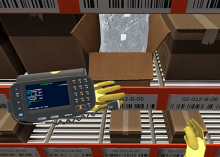 Discover the pivotal final steps of warehouse picking through VR Hard Hat's immersive Back-End Labeling course. Ensure product readiness, accurate shipment identification, and end-to-end traceability. Our course emphasizes precision in back-end labeling, minimizing logistical hurdles for efficient operations.
 -
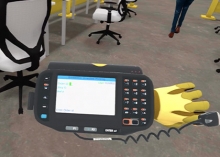 VR Hard Hat's Warehouse Picking: Case virtual reality course is meticulously designed to provide insights into the best practices of case picking, ensuring both speed and precision.
 -
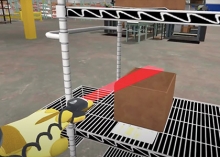 Front-end labeling, a vital component of the picking process, ensures that products are correctly identified, tracked, and dispatched. Proper labeling can reduce errors, improve efficiency, and enhance customer satisfaction. Hard Hat VR's course is designed to address the nuances of labeling at the initial stages of the picking process, ensuring that errors are minimized and efficiency is maximized.
 -
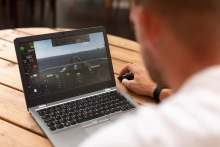 Leveraging 25 years of industry experience, unparalleled mathematical models and the latest techniques like gamification, virtual and augmented recreations, we offer the most sophisticated immersive training solutions to prepare mariners for the real world that awaits them onboard and onshore. These simulation solutions also expedite innovation and research processes by acting as the perfect testbed for new concepts and products that then directly contribute to the decarbonization and commercialization of the solutions.
 -
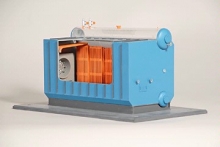 Item Number:355DAC Worldwide’s Water Tube Boiler Model (355) depicts a highly-detailed scale model of a common water tube boiler in a technically-accurate, professionally-crafted design. The model supports training in the operation and maintenance of industrial boilers found within utility systems in industrial facilities.
 -
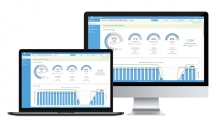 WebLytics from OnRobot is the first software solution that provides real-time production monitoring for collaborative applications across major robot brands.
 -
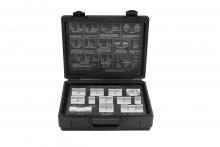 Item Number:825-000DAC Worldwide’s Weld Fault Comparison Kit (825-000) is a three-dimensional visual aid with accompanying training materials that facilitates basic training in weld quality and weld fault terminology by accurately depicting and identifying common weld defects.
 -
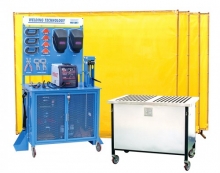 Item Number:950-WT1Welding is central to many industries including manufacturing, construction, and aerospace to name only a few. Welding is a blend of both art and science, joined together to create enduring bonds that allow us to create structures and machines on a scale impossible to achieve without it. The 950-WT1 teaches how to safely create an array of high quality weld types.
 -
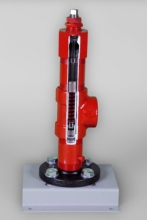 Item Number:295-703DAC's Wellhead Backpressure Regulator Cutaway (295-703) is a sectioned specialty regulator example for training in the operation, construction, and maintenance of three industrial back pressure regulators (BPRs), as used in gas and oil service in the oilfield.