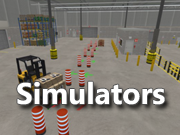
Simlog's new Wheeled Material Handler Personal Simulator puts you at the controls of a typical wheeled material handler equipped with an articulated boom, four-tine grapple, elevating cab, and outriggers. Many different kinds of situations typical of (metal) scrap recycling yards are presented, in order to address the training needs of a wide variety of customers using different operational practices.
Simulators
Prepare your students with the skills and confidence they need—safely, affordably, and effectively.
Simulation training transforms traditional learning by providing a risk-free, hands-on environment where trainees build essential skills before ever stepping into real-world equipment. Whether you’re focused on heavy equipment, driving, welding, or painting applications, simulators from CM Labs, Simlog, L3 Harris, and VRSim offer flexible and scalable solutions designed to meet the needs of modern workforce development.
Why Choose Simulation-Based Training?
- Reduce Training Costs: Lower fuel use, minimize wear-and-tear on physical equipment, and avoid costly on-site errors through safe, repeatable simulation.
- Train More, Safer: Provide unlimited practice time in a controlled virtual setting—ideal for mastering core concepts and building muscle memory.
- Standardize Performance: Evaluate every trainee with consistent metrics using built-in scoring tools and performance benchmarks.
- Promote Your Program: Use portable simulators to attract interest at job fairs, open houses, or recruitment events and grow your applicant pool.
- Accelerate Skills Progression: With foundational skills developed in simulation, students can reach competency faster—freeing up time for advanced training.
- Boost Outcomes & Employability: Better-trained graduates make stronger hires and elevate your program's reputation in industry and education circles.
Simulation is no longer a luxury—it’s a vital component of effective technical education. From heavy equipment operation to immersive driving and virtual reality spray painting, simulation technology helps your trainees build real-world skills with confidence and precision.
Explore our simulator solutions to take your training program to the next level.
-
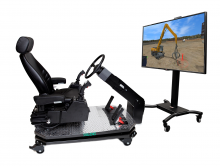 Item Number:WMH