The unit is used manually, with flows controlled by manual valves and flowmeters. The unit has a 2"-diameter glass column, which enhances the visual experience of the extraction process. A pneumatic pulsator increases the contact between the two phases and mass transfer. Students learn how to determine the interphase level, material balance, efficiency of the column, and more.
Pignat SAS
Pignat is a global leader in hands-on training systems for chemical and process engineering, offering robust, transparent units designed to enhance understanding of real-world industrial operations. With a focus on glass-based construction, Pignat’s systems allow learners to observe processes directly—bringing theory to life in both academic and industrial training environments. Trusted by universities, technical institutes, and research centers worldwide, Pignat products support education and experimentation across core disciplines like distillation, absorption, reaction kinetics, heat exchange, filtration, and more.
Pignat’s product range is thoughtfully organized to serve learners from introductory to advanced levels. Mini Units introduce essential principles on a lab scale, ideal for high schools, technical colleges, and undergraduate programs. Larger pilot and industrial-scale units replicate commercial conditions for advanced research and skill development, supporting graduate programs and workforce training initiatives. With transparent operation, integrated instrumentation, and options for manual or automated SCADA control, Pignat systems make it easy to visualize, analyze, and optimize chemical processes.
Explore individual process techniques—like distillation, crystallization, or extraction—or investigate full system behavior through multi-stage continuous plants and reactors. Every Pignat system is engineered for education, research, and innovation in the chemical sciences.
-
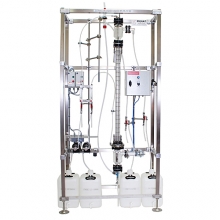 Item Number:ELL/4000
 -
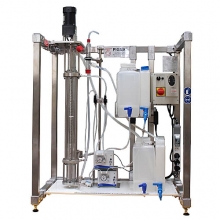 Item Number:ELA/100The unit is used manually, with flows controlled by manual valves and flowmeters. The unit has a stirred glass column, which enhances the visual experience of the extraction process. Students will learn how to determine the interphase level, material balance, efficiency of the column, and more.