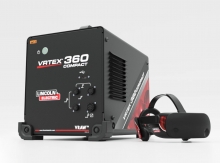
VRTEX 360 Compact
Make Virtual Welding Training Smarter, Faster and More Efficient
Lincoln Electric's VRTEX® 360 Compact is a small, portable Virtual Reality Welding Simulator for mobile use in multiple environments.

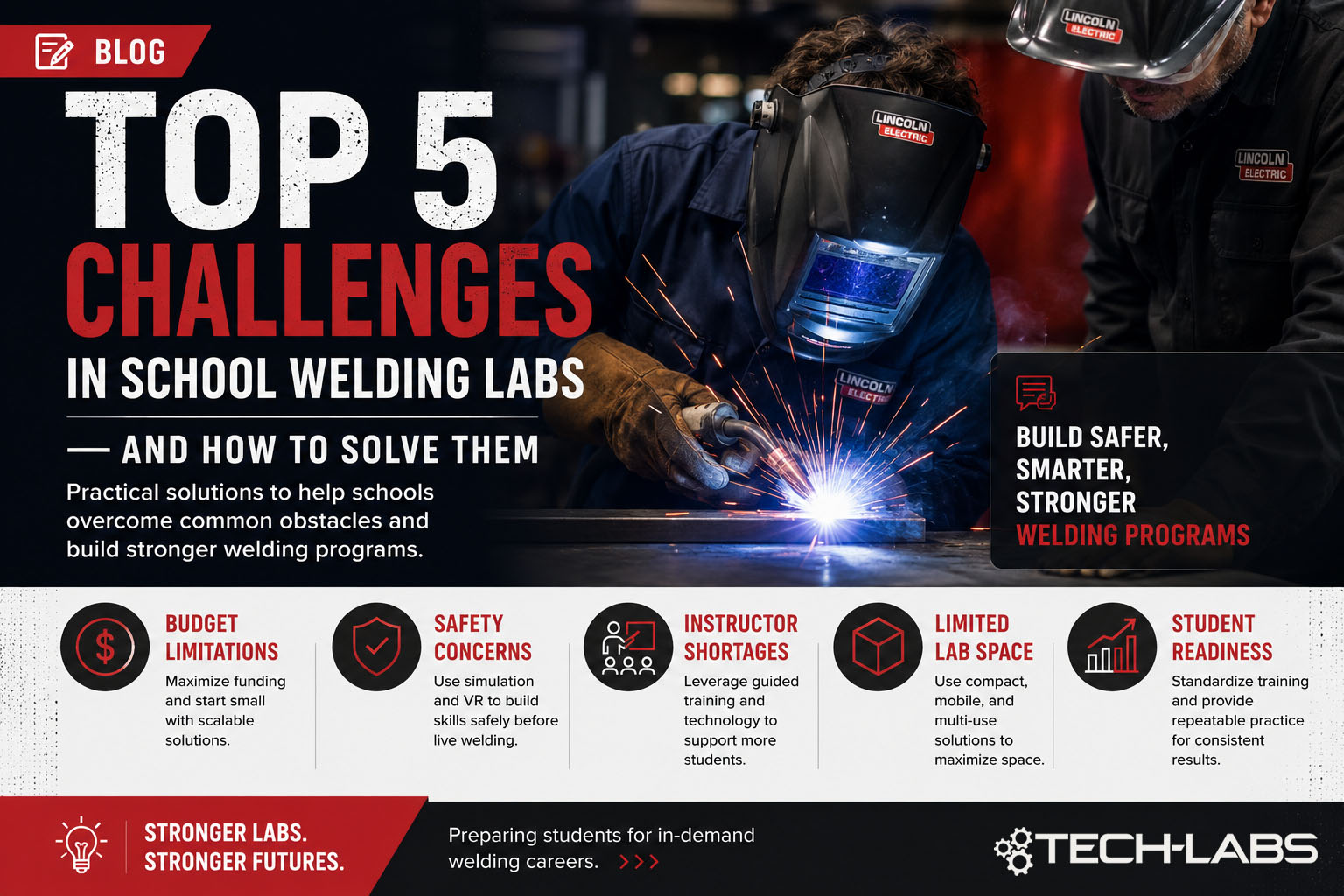
Welding programs play a critical role in preparing students for high-demand, high-paying careers. Yet many schools face real challenges when starting, expanding, or modernizing their labs.
The good news? You don’t need to start from scratch to make meaningful progress. Across K–12 and college programs, educators are finding practical ways to overcome common barriers and build scalable, industry-aligned training environments.
This guide outlines the five most common challenges in school welding labs—and how successful programs are solving them.
Welding equipment, consumables, and facility upgrades can require significant investment—making it difficult to launch or expand programs.
Tip: Many successful programs begin with a hybrid model—combining simulation, guided practice, and hands-on welding equipment.
Introducing new students to welding comes with safety risks, especially at the beginner level.
Solutions like Lincoln Electric Voyage Arc VR and Lincoln Electric VRTEX Virtual Welding Simulators are helping programs introduce welding concepts in a safe, engaging environment before transitioning to live arcs.
Experienced welding instructors are in high demand, and managing large classes can limit individualized instruction.
Result: Instructors can spend more time coaching advanced skills rather than repeating fundamentals.
Physical space often limits how many students can train at once or how much equipment can be added.
Many programs are increasing capacity without expanding square footage by integrating simulation alongside traditional welding booths.
Students often enter programs with varying skill levels, making it difficult to maintain consistent outcomes.
Programs that combine structured curriculum with hands-on and simulated practice see stronger student confidence and improved performance.
Modern welding programs don’t require an all-or-nothing approach. By combining traditional equipment with simulation, guided learning, and scalable planning, schools can build programs that grow over time.
Whether you’re starting a new program or upgrading an existing lab, the key is to focus on flexibility, safety, and long-term outcomes.
Tech-Labs works with schools and training programs to design welding labs that align with budget, space, and workforce goals.