MINDS-i STEM Robotics Drones LAB UAV (45 Hour)
Build, Program and Fly Unmanned Aerial Systems
Teach UAV engineering, programming, aerodynamics, GPS, telemetry, flight controls and autonomous systems with the MINDS-i 45-hour Drones LAB.

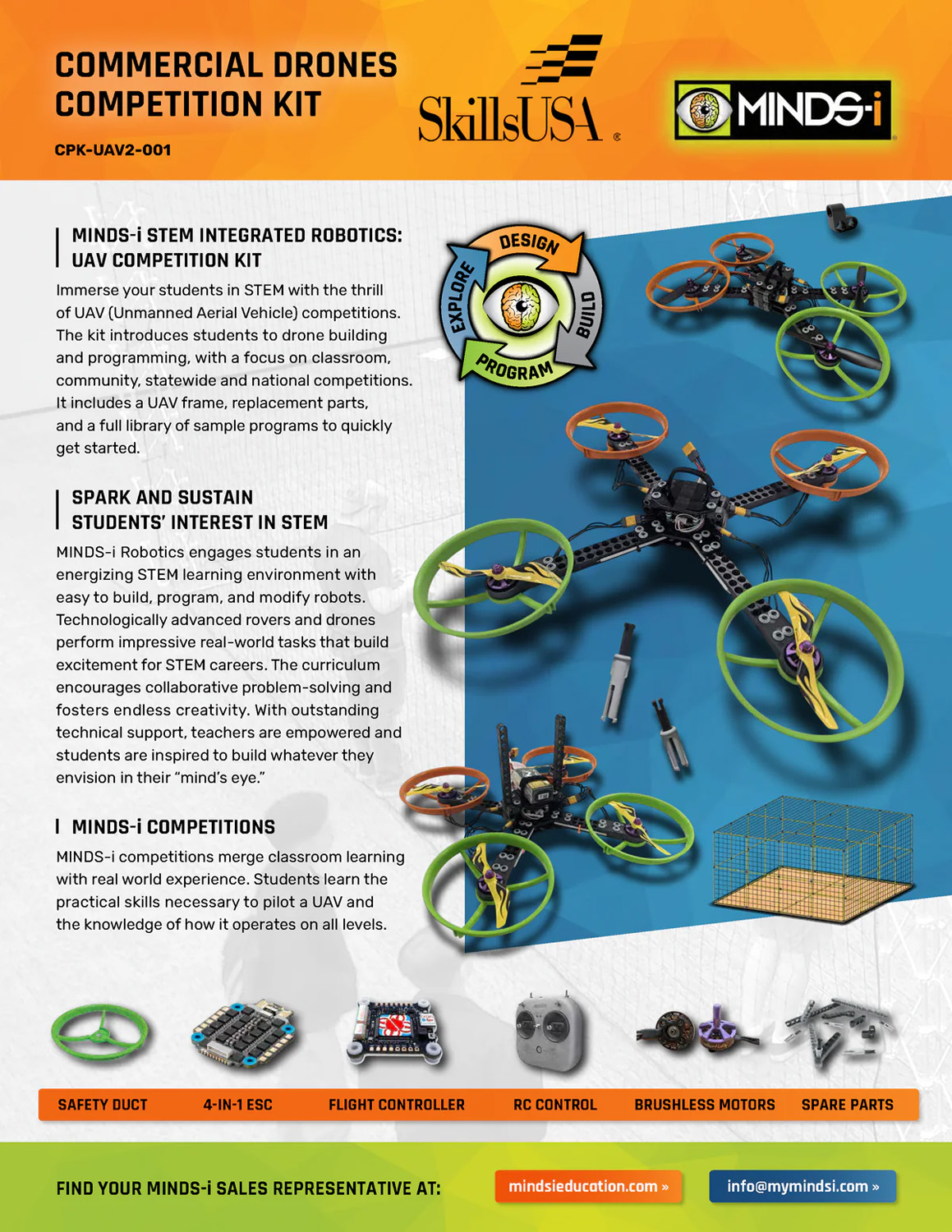
The MINDS-i UAV Competition Kit gives students a hands-on platform for building, configuring, tuning, and flying a multirotor UAV in competition-based STEM activities. Designed for small groups of 2–3 students, the kit supports practical skill development in UAV construction, flight controls, electronics, programming, troubleshooting, and teamwork.
Students can modify the airframe, calibrate flight systems, test different configurations, and refine their design for specific challenges. The platform is suitable for classroom competitions, STEM clubs, makerspaces, and organized drone competition programs.
Competition gives students a reason to apply what they know under real performance constraints. Building and flying a competition UAV encourages students to test ideas, diagnose problems, make adjustments, and evaluate how design choices affect flight behavior.
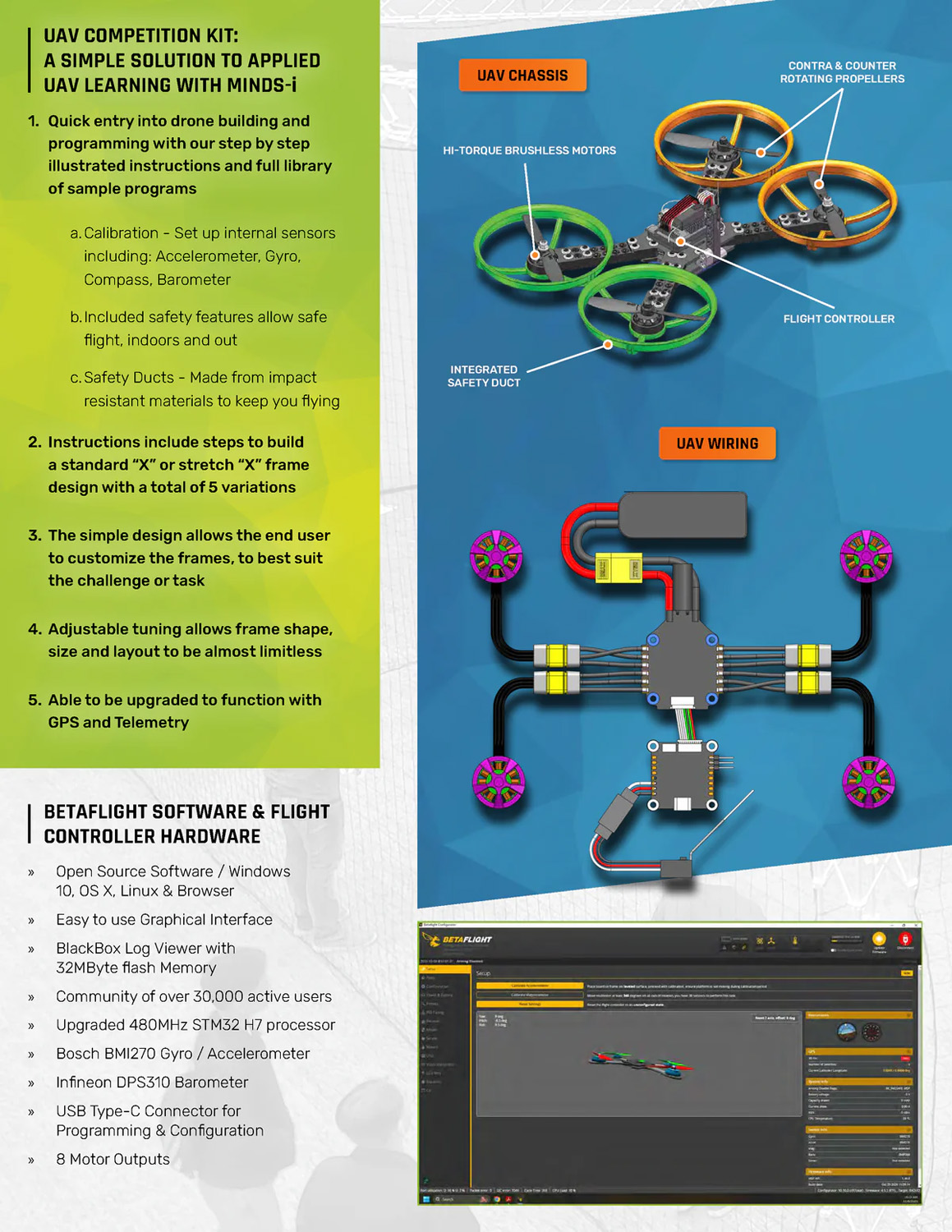
The MINDS-i UAV Competition Kit provides a configurable multirotor platform that students can adapt to different challenges. Students can build standard or stretched frame configurations, adjust the layout, and tune the aircraft to meet performance goals.
Step-by-step illustrated instructions and sample programming resources help students get started while leaving room for experimentation and customization.
The UAV Competition Kit uses Betaflight flight-control software, giving students access to a graphical interface for configuring, calibrating, and tuning the aircraft.
Each kit is designed for a small group of 2–3 students.
Component colors and models may vary.
MINDS-i competition activities combine classroom learning with applied UAV challenges. Students develop practical piloting, troubleshooting, and engineering skills while learning how airframe design, flight controls, electronics, and operating conditions affect UAV performance.
Give students a competition-ready UAV platform they can build, configure, tune, fly, and improve through hands-on engineering challenges.