MINDS-i FAA Part 107 Certification Prep (45 Hour)

MCK-107P-001
Prepare Students for the FAA Part 107 Knowledge Test
MINDS-i FAA Part 107 Preparatory Course for commercial drone and UAV operations
Build FAA Part 107 Readiness Through Structured UAV Instruction

The MINDS-i FAA Part 107 Certification Prep Course provides 45 hours of instruction covering the aviation knowledge students need to prepare for the FAA Part 107 knowledge test. Students explore regulations, airspace, weather, aircraft performance, emergency procedures, radio communications, aeronautical decision-making, airport operations, and safe small unmanned aircraft system (sUAS) operations.

Designed for programs introducing students to professional drone operations, the course connects aviation knowledge and safety practices to real-world UAV applications in fields such as inspection, photography, mapping, agriculture, and search and rescue.

Build the Knowledge Behind Commercial Drone Operations

Operating drones professionally requires more than learning how to fly. Students need to understand the regulations, airspace, weather conditions, operational procedures, and decision-making principles that support safe and responsible UAV operations.

  • FAA Regulations – Explore rules governing small unmanned aircraft operations.
  • Airspace & Flight Restrictions – Understand controlled, uncontrolled, special-use, and other airspace.
  • Aviation Weather – Examine weather sources and how atmospheric conditions affect small UAVs.
  • Aircraft Performance – Explore loading, balance, stability, and environmental factors affecting performance.
  • Operational Safety – Study emergency procedures, preflight inspections, and crew resource management.
  • Aeronautical Decision-Making – Develop risk-management and situational-awareness skills.
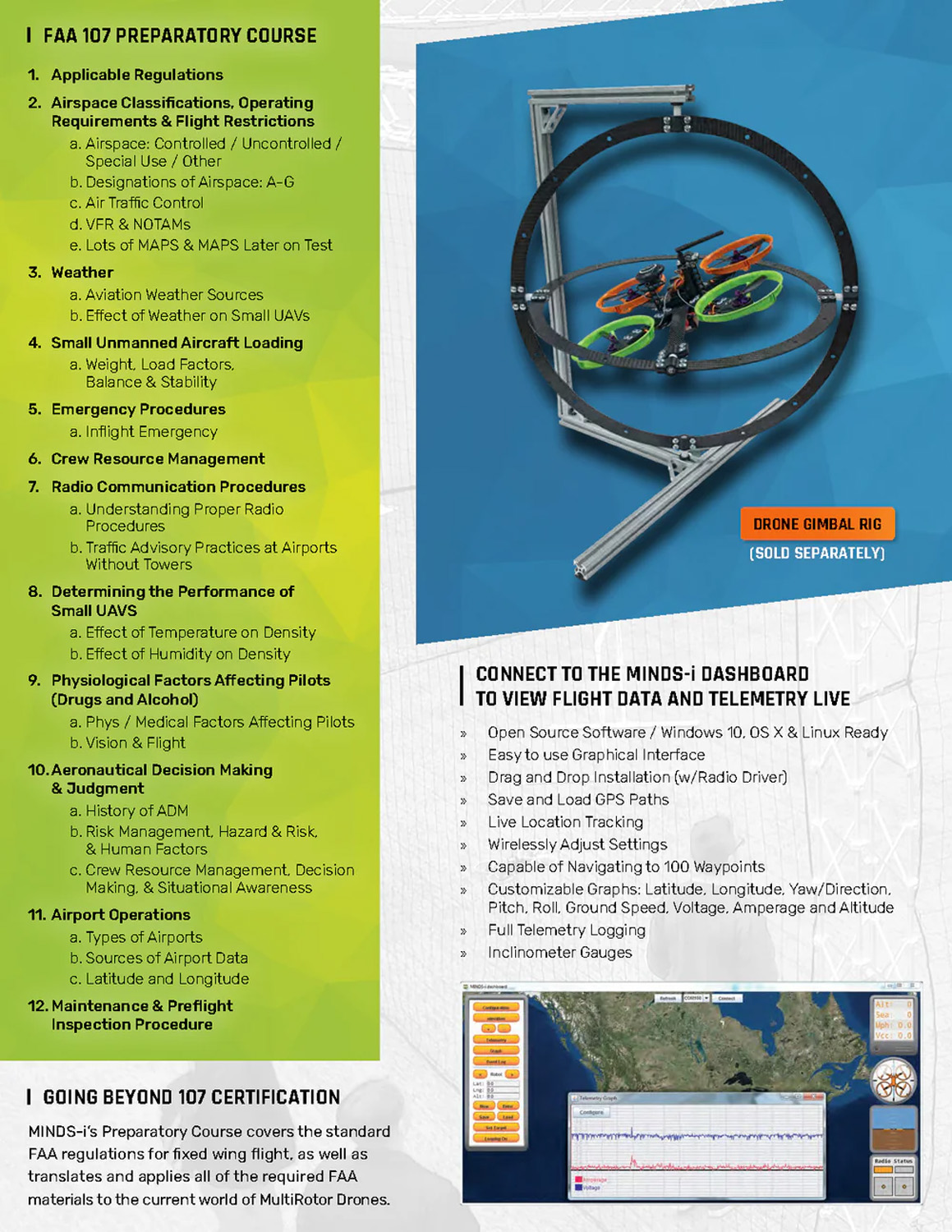
  1. Applicable Regulations
  2. Airspace Classifications, Operating Requirements & Flight Restrictions
    • Controlled, uncontrolled, special-use, and other airspace
    • Airspace Classes A–G
    • Air traffic control
    • VFR and NOTAMs
    • Map interpretation
  3. Weather
    • Aviation weather sources
    • Effects of weather on small UAVs
  4. Small Unmanned Aircraft Loading
    • Weight and load factors
    • Balance and stability
  5. Emergency Procedures
    • In-flight emergencies
  6. Crew Resource Management
  7. Radio Communication Procedures
    • Proper radio procedures
    • Traffic advisory practices at airports without towers
  8. Determining the Performance of Small UAVs
    • Effect of temperature on air density
    • Effect of humidity on air density
  9. Physiological Factors Affecting Pilots
    • Medical and physical factors
    • Vision and flight impairments
  10. Aeronautical Decision-Making & Judgment
    • Aeronautical decision-making
    • Risk management and human factors
    • Decision-making and situational awareness
  11. Airport Operations
    • Types of airports
    • Sources of airport data
    • Latitude and longitude
  12. Maintenance & Preflight Inspection Procedures

Connect Drone Training to Career Applications

Part 107 knowledge supports students interested in professional UAV applications across a growing range of industries. The course can complement hands-on drone flight and engineering instruction while introducing the regulatory and aviation knowledge required for commercial small UAS operations.

  • Aerial photography and videography
  • Infrastructure and facility inspection
  • Mapping and surveying applications
  • Precision agriculture
  • Search and rescue
  • Construction and site documentation
  • Public safety and emergency response

Help students build the aviation knowledge, safety awareness, and decision-making skills needed to prepare for the FAA Part 107 knowledge test and professional drone operations.
More Information

Ideal For

  • Drone and UAV programs
  • CTE aviation programs
  • STEM education
  • Unmanned aircraft systems programs
  • Career and workforce preparation
  • Programs preparing students for the FAA Part 107 knowledge test