Refrigerant Service and Diagnostics

Develop Hands-On Refrigerant Service and Diagnostic Skills

Refrigerant Service and Diagnostics Learning Systems help learners develop the measurement, recovery, evacuation, charging, and system-evaluation skills used by HVAC/R technicians.

Using professional service equipment and interactive curriculum, learners practice working with R-134a, R-410A, and R-454B refrigerants while learning to interpret pressure, temperature, superheat, subcooling, and evacuation measurements.

Practice with Professional HVAC/R Service Equipment

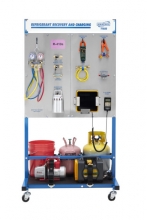
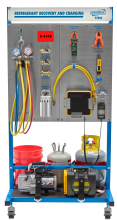
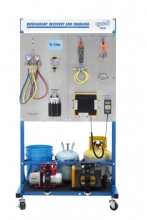
Amatrol’s refrigerant service systems combine real-world tools with guided learning activities. Learners gain experience using recovery machines, vacuum pumps, refrigerant scales, service hoses, manifold gauges, temperature probes, leak-detection tools, and digital diagnostic instruments.

Recovery and Charging

Practice refrigerant recovery, recycling, evacuation, charging, leak detection, and service-valve procedures using professional HVAC/R equipment.

System Diagnostics

Measure pressure and temperature, calculate superheat and subcooling, evaluate system charge, and interpret HVAC/R operating conditions.

Modern Refrigerants

Support training for installed R-134a and R-410A equipment while preparing learners to work with R-454B and current A2L service practices.

  • Refrigerant properties and pressure-temperature relationships
  • Refrigeration-system leak detection
  • Refrigerant recovery and recycling
  • System evacuation and vacuum measurement
  • Refrigerant charging procedures
  • Operating-pressure measurement
  • Pipe and refrigerant-temperature measurement
  • Superheat and subcooling calculations
  • System-charge evaluation
  • Gauge-manifold setup and operation
  • Digital probes and connected diagnostic tools
  • Service procedures for conventional and A2L refrigerants

HVAC/R technicians may encounter several refrigerant types throughout their careers. Training with R-134a and R-410A supports service work on existing refrigeration, residential, and light-commercial equipment, while R-454B training helps programs prepare learners for newer systems using mildly flammable A2L refrigerants.

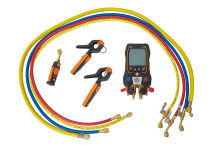
The Digital Gauge Manifold Learning System extends these skills by helping learners measure and interpret system conditions using modern digital instruments, wireless probes, and connected applications.

These systems are designed primarily for high school HVAC/R and CTE programs, technical schools, community colleges, apprenticeship programs, workforce-development organizations, and industrial training centers.

Refrigerant handling activities require appropriate supervision, compatible equipment, and compliance with applicable safety and certification requirements. In the United States, instructors conducting regulated refrigerant activities may need EPA Section 608 certification.